
Business Pillars Part 1: The Practices Every Great Business Is Built Upon
Real-world insights for leaders who want clarity, systems, and results.

I’ve been studying business for 22 years now.
The first seven years were spent working for a stellar family-owned business. I watched, I learned, I grew, I challenged, and I made a boatload of mistakes. All the while I was maniacally studying the business classics: The E-Myth, Good to Great, Rework, Delivering Happiness, Purple Cow, etc.
The last 15 years have been spent growing businesses. Trinity Ventures, Trinity Renovation, kitchen & bath CRATE, Zusti, and Trinity Builder Solutions. Some worked, some did not. All contributed to “the vault.”
But it occurred to me I’ve never put it all together. So, inspired by a mini think week of sorts with my sister (and now podcast co-host), I thought I might gather it all up for you in a single series I’m calling “Business Pillars.”
In the months ahead, I’ll be highlighting the five pillars of business. These are the elements upon which a great organization is built. At any given moment, a business is strong in some of these areas and weak in others. That’s the nature of business, especially small and mid-sized businesses. They’re organisms. They grow, they get sick, they die. Sometimes they’re on top of the world, sometimes they’re on life support. And if we’re trying to diagnose an issue, these pillars are the starting point.
But before we dive into an overview of these pillars, allow me to share my opinion on what makes a great business.
A great business is a culmination of resources (people and assets) that fulfills a market need with excellence while producing both significant net profit and an amazing place for employees to work.
That’s it. That’s a great business in a nutshell. Take any part of that sentence away, and you have something less than a great business.
But of course, the main question is “how?”
That’s where the pillars come in. Without these five actions, you can’t have a great business.
And I use the word “action” deliberately.
These pillars aren’t built and then left alone. They are a daily decision to improve and resist degradation. These pillars, due to human nature and a broken world, are always degrading.
It’s like a garden. You have to plant, water, fertilize, weed, and tend in order to harvest.
Let’s take a look at these five pillars today, and in the weeks to come, I’ll dive deeply into each one.
1. Clarifying the Plan and Direction
The company as a whole, as well as each individual, must clearly understand where the organization is headed and their role in that journey. Additionally, the core values through which all decisions are filtered must be identified and lived out. A consistent cadence must be in place to update and adjust the plan for market conditions and changes in customer and team needs.
—> Read the detailed newsletter on this topic here!
2. Designing the Customer Experience
The prototypical customer must be clearly identified, and their experience with your company at every step must be engineered to delight. There must be a feedback loop in place, a canary in the coal mine, leading to quick action when things go awry. A plan for turning customers into raving fans must be implemented.
3. Designing the Team Member Experience
A-players like working with A-players. So finding and keeping A-players is step one. Allowing non-A-players to pursue new opportunities is the next step. Once the team is established, defining the goal (see foundation 1) and empowering them to do their best work without micromanagement is the gold standard. Providing exceptional support, encouragement, and leadership along the way is critical to maximizing job satisfaction.
4. Communicating to the Market
It starts with developing authentic messaging to your exact prototype customer. Next is making sure this message gets in front of them (where their eyeballs are). Marketing should always focus on what customers care about, not what the business cares about. Tracking the return on investment of every marketing dollar is how you steer the ship.
5. Modeling the Money
Accurate financial reporting tells the story. It’s a way to look back and see what is working and what's not from a profitability perspective. Just as important, financial forecasting is designing the future. It takes both looking back (reporting) and looking forward (forecasting) to develop the optimal financial system. Until both of these are in place, it’s like driving in the fog.
Wrap Up
Building a great business or organization is not for the weak. It takes exceptional effort, humility, and grit. It takes leadership that cares and is unwilling to compromise on anything short of excellence.
If you’d like to get this upcoming series directly in your inbox, please go ahead and subscribe. And of course, if you know someone who may benefit from this information, please share this email with them.
I appreciate you following along on this journey. As always, let me know if I can help in any way: scott@scottmonday.com.
Go to Part 2 of this series by clicking here!
Thanks for reading this post. I appreciate you. In return, please share this with those you know who may be interested.

Free Guide: 🧠 Build Your 2026 Business Plan Using AI
I just released my full framework for building a 2026 Playbook: a simple, AI-assisted process to help you plan the year ahead in hours, not days.
If you lead a business or team, this is the exact tool I use every October to clarify goals, align strategy, and make next year’s planning effortless.
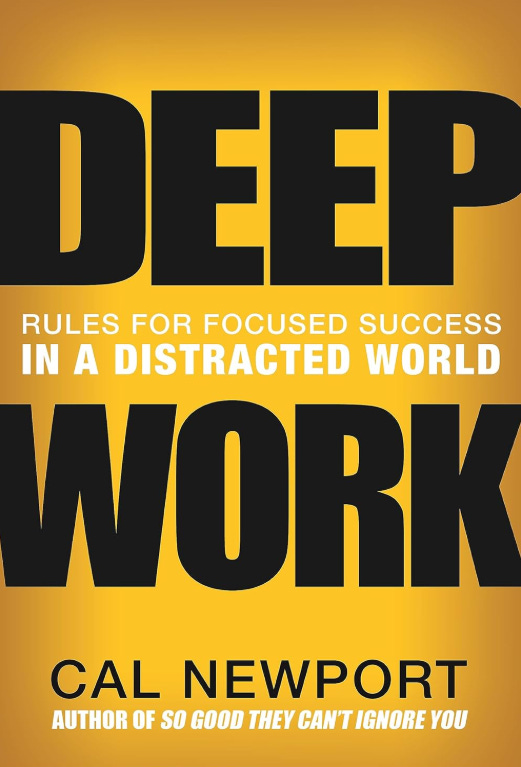
Things I've Enjoyed Lately: I know it’s going to sound like a New Year’s resolution doomed to fail, but I’m going to make a very intentional effort in 2026 to become more focused and less reactionary. I have a long way to go. Cal Newport’s Deep Work will be my field manual. It’s fantastic. If you’re like me and find yourself trapped in “the weeds” of life, too, give this one a read.