
Business Pillar 4: Communicating to the Market
Get this wrong and your growth stalls. Get it right and everything accelerates.

A few weeks back, I outlined what I call “Business Pillars,” the five critical elements to any kick-ass, top-notch, dominate-the-competition business. Over the coming weeks, we’ll do a deep dive into each of these pillars. You won’t want to miss it.
Our first pillar was Clarifying the Plan and Direction, our second was Designing the Customer Experience, and our third was Designing the Team Member Experience. This week, the topic is all about how we communicate to the market.
This is really how we attract new customers and accelerate our brand's reach to the right people and bring them into our customer fold.
This pillar is truly the lifeblood of any business. If you don’t have a distinct system for communicating to the market, you can’t attract new customers. And if you don’t have new customers, your revenue inflow dries up, and you’re out of business just like that.
So many people do all the right things to create a good product and produce good content. But if they don’t communicate it to the market with purpose and accuracy, it doesn't work.
Definition of Excellence
At its core, excellent market communication results in a lead flow sufficient to meet your revenue and growth needs.
Furthermore, the companies that communicate best do so in a way that deeply resonates with the customer. Their messaging is memorable. It touches the hearts of their customers.
It creates an overwhelming feeling of “they get me.” It’s an amalgamation of brand resonance and belonging to a brand “tribe.”
You know: “People like me use this product or service. It’s meant for me.”
This is the penultimate version of proper communication to the market.
But how do we do this?
Here are the building blocks for impactful market communication.
Element 1: Develop “Selfless” Content
When developing content for your customers, it’s critical to focus on what they care about, not what you care about.
It’s easy for companies to market around self-centered concepts, like announcing anniversaries, highlighting internal promotions, or talking about new products and why they launched them.
Those things can all be good, and there’s a place for them. But what you want to lead with is content that speaks directly to what your customer actually cares about.
If you remember back to Pillar 2, the first thing we discussed was defining your customer avatar. This pillar builds directly on that. Once you define that avatar, you can create content they genuinely care about.
In essence, you want to get into your ideal customers' minds. Think through what information, concepts, tips, educational material, and insights they would deeply value. That should be the focus of your marketing efforts.
Element 2: Authenticity Above All
Authentic content simply works.
By that, I mean customers love things that are true and genuine.
In 2026, there are countless ways to show behind-the-scenes moments and speak directly to customers in a personal way. We have more tools than ever to create videos and written content that customers instinctively know are authentic.
Don’t be afraid to hit “publish” on things that are a bit raw, imperfect, or unpolished. It works.
Conversely, be wary of marketing tactics that are distinctly inauthentic.
A competitor of ours launched during the COVID years. Their marketing rollout was dominated by a brand-new website filled entirely with stock images of projects they never built. A reverse-image search on Google quickly exposed this. It was a completely disingenuous way to start a business, “fake it till you make it” at its worst.
Customers can see through that. And especially in the age of AI, when fake content is easier than ever to produce, it’s critical to focus on the human-to-human side of communication and avoid the rabbit hole of AI-generated slop.
Element 3: Own Your Platform
Platforms come and go, so your content needs to live on assets you control.
Two assets immediately come to mind: your company website and your email distribution list.
That may sound a bit archaic, but websites remain a critical element of any marketing strategy. And for many businesses, email marketing still works exceptionally well.
Social media should be viewed primarily as a channel to drive traffic to your website and build your email list. Do I think Facebook, Instagram, or TikTok are disappearing anytime soon? No. But at the end of the day, those platforms can be shut down, restricted, or banned. It’s rented land.
Element 4: Track Every Dollar
One of the most frustrating parts of marketing is tracking return on investment. The challenge lies in truly knowing where a lead came from.
For some businesses, lead attribution is simple. If you sell products online, you likely have strong analytics that clearly show where customers are coming from.
For service businesses or those driven by foot traffic, it’s much harder. Even when you ask customers how they found you, their answers don’t always tie cleanly back to a specific marketing spend.
Regardless, it’s essential to analyze how your marketing dollars are being deployed. The non-negotiable here is having some form of CRM that tracks leads and conversions. This can range from a simple spreadsheet to a robust system like Salesforce or HubSpot.
It’s also important to align your accounting system, specifically your chart of accounts, with your lead sources. This allows you to produce monthly or quarterly reports that at least partially connect marketing spend to CRM results.
Will this ever be perfect? Probably not. But having these systems in place gives you a far better chance than flying blind.
Element 5: Reputation Is Reality
Your company is only as good as what your customers say it is.
And by “say,” I mean both online and through word of mouth.
Depending on your industry, one of these may matter more than the other.
I run a residential remodeling company selling to homeowners and a commercial subcontracting company selling to general contractors.
For the former, online reviews and digital reputation are paramount. Word of mouth still matters, but brand exposure is largely online.
For the latter, we have very little online presence. Our customers care far more about industry reputation and long-standing relationships than websites or reviews.
The goal is to think deeply, again, about your customer and determine how they’re most likely to encounter your business. Then focus your reputation efforts there.
Tools and Inspiration
I’ll suggest two books as you roll out your communication strategy.
The first is Marketing Made Simple by Donald Miller. He’s the originator of the StoryBrand concept, and this book provides a clear, practical framework for marketing.
The second is Never Lose a Customer Again by Joey Coleman. It’s especially effective for business-to-business environments, but it applies well to business-to-consumer, too.
You can’t go wrong with either, regardless of your industry.
Wrap Up
There’s no more important business skill to master than communicating to the market.
If you can consistently generate qualified leads at a cost that works for your business model, you’re unstoppable.
And consider this: expertise in this area is one of the best ways to offset inevitable market fluctuations.
The economy will rise and fall. But if your marketing touches hearts, makes customers feel understood, and builds brand trust, you’ll weather those storms far better than competitors who don’t.
The final pillar we’ll cover is Modeling the Money. This is all about setting up your company's financials for both backward-looking accuracy (reporting) and forward-looking effectiveness (forecasting).
If you’d like to get this upcoming series directly in your inbox, please go ahead and subscribe. And of course, if you know someone who may benefit from this information, please share this email with them.
I appreciate you following along on this journey. As always, let me know if I can help in any way: scott@scottmonday.com.
My sister and I launched a podcast for sub-$20M business owners and operators. Episode 5 is out!

We’d be honored if you’d give it a listen! You can listen on Apple Podcasts, Spotify, or whatever other platform you prefer!
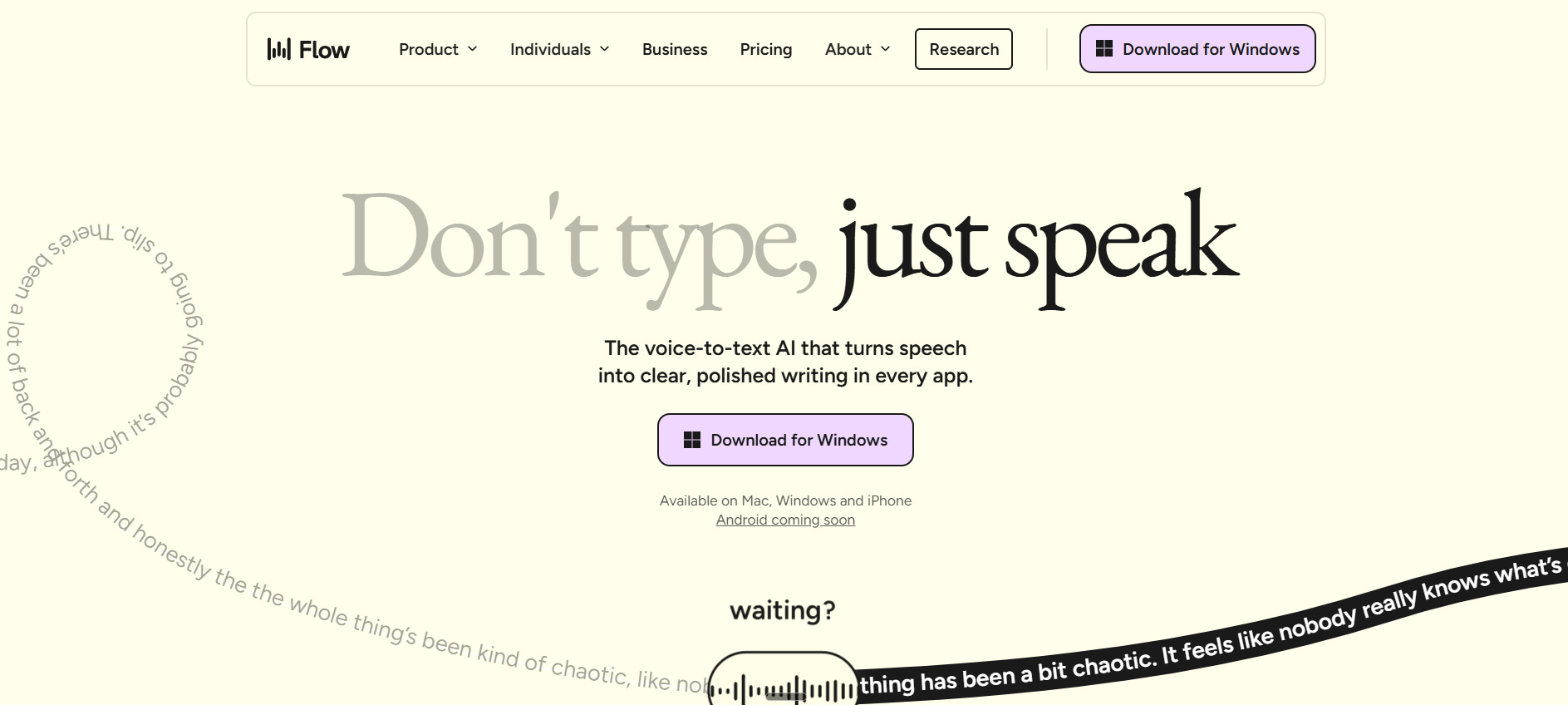
Things I've Enjoyed Lately: My Monday Next podcast co-host, and business-operating sister, Meredith, turned me on to Whispr Flow during a recent recording. It’s a serious productivity hack. It’s saving me a ton of time processing emails, responding to messages, and outlining content. A massive improvement over any voice-to-text tool I’ve used before. Here’s a link if you want to try it for free.